Kite Class
Kite Class
Teachers: Mrs Maddy Pengelly
Teaching Assistants: Mrs M Cornthwaite and Mrs N Hazzard
Welcome to the Autumn term. We have an exciting curriculum planned for this term (more details below). If you do have any questions, please do not hesitate to ask any of the Kite staff.
Please can we remind everyone to ensure their child has a fruit or veg snack to eat at break. Also, remember we only allow water in the drink bottles.
Kite Curriculum overview B 2026.27
Kite Class – Autumn Term
This autumn, Kite Class will enjoy a broad and engaging curriculum. Our learning will develop pupils’ knowledge, creativity, independence and confidence across all subject areas.
English
Our English work will include both short-burst and extended writing. Pupils will explore:
- A Royal Wedding, leading to a non-fiction newspaper report using recount-writing techniques.
- A Cinderella rags-to-riches tale, with a particular focus on creating effective settings.
- Poetry, exploring a range of poetic techniques.
- Independent invent writing, giving pupils opportunities to apply their skills and “show what they know”.
Spelling, punctuation and grammar will be taught throughout the term, alongside regular reading and writing activities.
Maths Maths lessons will build pupils’ fluency, reasoning and problem-solving skills. Teaching will be adapted to the appropriate year-group objectives.
Year 4 Pupils will learn to:
- Read, write, compare and order numbers up to 10,000.
- Round numbers with up to four digits to the nearest 10, 100 or 1,000.
- Add and subtract numbers with up to four digits using mental strategies.
- Learn and use multiplication and division facts for the 6, 7 and 9 times tables.
- Identify and classify different quadrilaterals
Year 3 Pupils will learn to:
- Read and write 3-digit numbers Compare and order numbers up to 1000
- Finding 10 or 100 more or less than a given number
- Recognise and count in tenths Recognise horizontal, vertical, perpendicular and parallel lines
- Add numbers with up to 3-digits mentally
- Subtract numbers with up to 3-digits mentally
- Know and use multiplication facts for 3, 4 and 8 multiplication tables
Times tables will be practised regularly to strengthen pupils’ confidence and recall.
Science
Animals, Including Humans
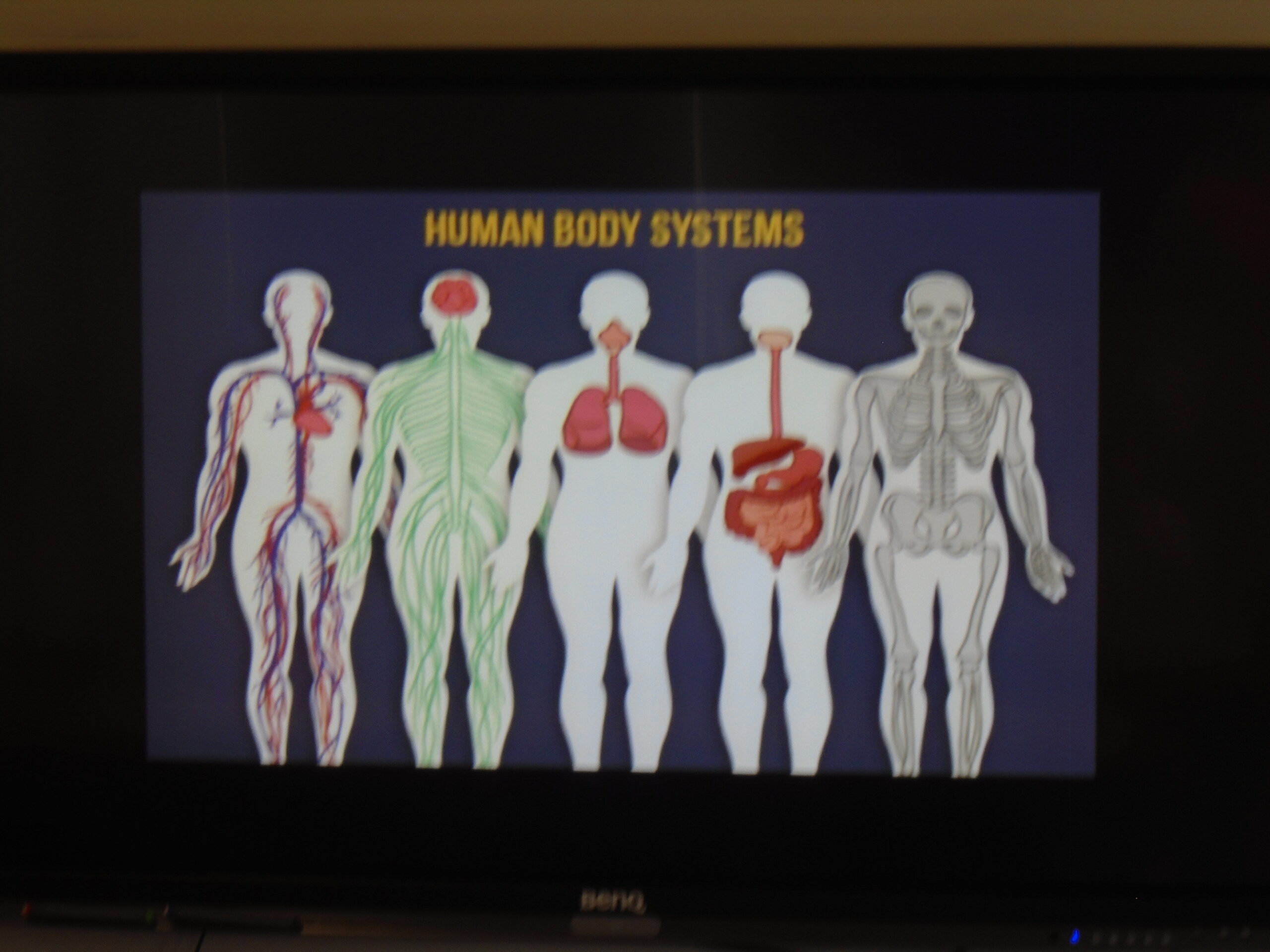
Pupils will learn that animals, including humans, need the right types and amounts of nutrition. They will explore how animals obtain nutrition from food and investigate how skeletons and muscles provide support, protection and movement.
Light
Pupils will investigate how light allows us to see and learn that darkness is the absence of light. They will explore:
- How light is reflected from surfaces.
- Why sunlight can be dangerous and how to protect their eyes.
- How shadows form when solid objects block light.
- How and why the size of a shadow changes.
Religious Education
What Kind of World Did Jesus Want?
Pupils will explore the Christian concept of the Gospel, focusing on the life and teachings of Jesus and the “good news” Christians believe he brought. They will learn about the calling of the first disciples, Jesus’ treatment of others and how Christians try to follow his example today.
The class will also study the parable of the Good Samaritan and consider the importance of charity in the lives of many Christians.
What Is the Trinity and Why Is It Important for Christians?
Pupils will study the biblical account of Jesus’ baptism and explore Christian beliefs about God and the Trinity. They will consider how these beliefs influence Christian life and worship, before learning about infant and believer’s baptism and their significance today.
History
Our enquiry question is:
What Impact Might Monarchy Have Had on Long Sutton Over Time?
Pupils will explore how national events and different monarchs have affected the local area. They will:
- Place historical periods on a scaled timeline.
- Identify the causes and consequences of significant events.
- Investigate how religion and government changed locally.
- Learn about monarchs and their influence on Long Sutton and the surrounding area.
- Explore King Ina of Wessex and his support for Christianity.
- Find out about the Magna Carta and how it affected King John.
- Examine the impact of Henry VIII’s religious changes on the local church.
- Use maps, photographs, pictures, sources and artefacts to investigate change.
- Compare significant individuals and the challenges they faced.
- Consider why there may be more than one interpretation of the past.
A church visit will help pupils examine historical evidence and understand how national history is reflected within the local community.
Geography
Our enquiry question is:
What Is It Like to Live in Italy?
Pupils will locate Italy and other key European countries using maps. They will investigate Italy’s major cities, environmental regions and human and physical characteristics, including its:
- Climate zones.
- Rivers and mountains.
- Volcanoes and earthquakes.
- Settlements and land use.
- Economic activities.
They will compare life in Italy with life in the UK, identifying important similarities and differences. Pupils will also develop their understanding of latitude, longitude, the Equator, and the Northern and Southern Hemispheres.
Art
Our drawing work will be inspired by the detailed pencil drawings of Diego Fazio. Pupils will experiment with pencils, charcoal, ink, chalk, pastels and digital drawing tools. They will develop skills in:
- Close observational drawing.
- Recognising positive and negative shapes.
- Drawing faces and whole people accurately.
- Using scale, proportion and placement.
- Showing the effects of light.
- Producing preparatory sketches.
- Working at different scales.
- Creating computer-generated drawings.
Pupils will also investigate colour through paint, ink, dye, textiles, pencils, crayons and pastels. They will practise colour mixing, make colour wheels and explore tints, tones and shades. Techniques such as dotting, scratching and splashing will help them use colour to create different moods and effects.
Design and Technology
Food: Adapting a Recipe
Pupils will follow and adapt a biscuit recipe. They will evaluate biscuits by considering their taste, smell, texture and appearance, before experimenting with additional ingredients.
The class will then plan its own biscuit recipe while working within a set budget.
Computing
Pupils will continue to develop their essential computer skills, including:
- Logging in securely with their own password.
- Creating and opening documents in Microsoft Word.
- Using “Save As” appropriately.
- Changing font size and colour.
- Using Word’s dictation tool.
- Using a search engine safely and effectively.
Computing Systems and Networks: The Internet
Pupils will build on their understanding of networks and learn that the internet is a network of networks that must be kept secure. They will explore the relationship between the internet and the World Wide Web, as well as who owns online content and what users may access, create, download and share.
Online safety lessons will help pupils think carefully about ownership, permission, advertising, and whether online information is accurate and honest.
Creating Media: Audio Production
Pupils will identify the input and output devices needed to record and play digital sound. They will learn about ownership and copyright before using Audacity to create a podcast.
They will record, edit and combine multiple audio tracks, learning how to trim, align, layer, save and export their work as an MP3. Pupils will also evaluate their recordings and respond to feedback.
Music
Changes in Pitch, Tempo and Dynamics
Using rivers as inspiration, pupils will listen for changes in pitch, tempo and dynamics. They will connect musical features with the different stages of a river and create vocal and percussion ostinatos.
The unit will culminate in a collaborative group performance.
Physical Education
During the first half of the autumn term, pupils will develop their skills through tag rugby and netball.
In the second half of the term, the focus will move to gymnastics and dance, developing control, coordination, balance, movement and creativity.
Personal, Social, Health and Economic Education
Our PSHE learning will help pupils develop healthy relationships, emotional awareness and responsible behaviour. Topics will include:
- Classroom expectations and rules.
- NSPCC learning.
- Zones of Regulation.
- Careers education.
- Families, friendships and emotions.
- Healthy relationships and knowing when to say no.
- Recognising and expressing feelings.
- Anti-bullying.
- Negotiation skills.
- Non-verbal communication and personal space.
- Online safety, health, wellbeing and lifestyle.
French
Pupils will learn and practise a variety of French greetings. Using puppets and spoken activities, they will introduce themselves, select greetings appropriate to different times of day and ask others how they are.
The emphasis will be on confident speaking, careful listening and enjoying the French language.
Weekly Spelling Tests will be on a Friday. All children have a paper copy and also a copy stuck in their reading record books.
Y4 Spellings Summer Term 2
Y3 Spellings Summer Term 2 26
ALL YEARS : Encourage your child to develop their Times Table knowledge
Reading- Please sign your child’s reading record every time they are heard reading. This will show a minimum of 4 reads a week is being completed. Reading record books will be checked every Friday and signed by member of Kite staff.
If you are using the AR scheme ,please log on below and complete a quiz. Always keep reading. Read aloud to an adult daily and read to themselves for at least 20 minutes a day, preferably more. Here is a link to questions to ask when listen to your child reading. If possible share stories as a family too. Write a book review for each book you read.
A reading website that has updated lists of children’s authors reading aloud and fun activities. https://www.weareteachers.com/virtual-author-activities/?utm_content=1584565321&utm_medium=social&utm_source=facebook
Class work for children who are absent but able to work:
English
Have a go at the writing activities. Why not write your own tale using a character you have created and a detailed setting description? There are some help sheets below.
Create a character: Character Description
How do you write dialogue? Remind yourself here:Dialogue help Have a go at creating a setting: story-settings-writing frames
Children can write out the times tables. As a guide , begin with 10X, 5X and 2X. Move on to the others up to 12X. The corresponding division facts should also be learnt.
Reading 4 times a week for at least 20 minutes is encouraged. AR quizzes (for those using AR) can be accessed during school time.
Maths: Click on the links on the sheet.
Maths isolation workwho-was-jesus-6mv66c-9bc2d80dd348839
Time –
1.maths-ks2-lesson Time to the minute Powerpoint
1.maths-ks2-lesson Time to the minute worksheet
2.Telling-the-time AM PM answers
Here is some shape revision:
Gallery